

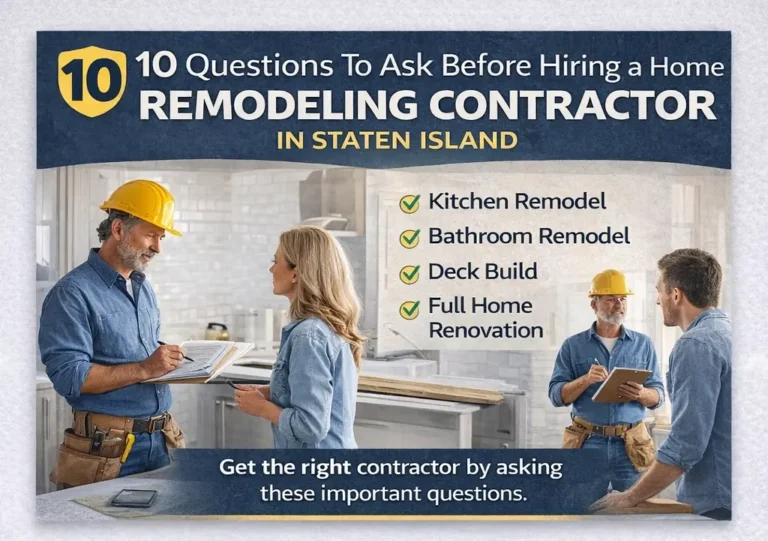
👉 10 Questions to Ask Before Hiring a Remodeling Contractor in Staten Island (Avoid Costly Mistakes)
Home remodeling can upgrade comfort, improve layout, and boost resale value—but only if the job is managed correctly. If you’re planning a kitchen renovation, bathroom remodel, deck build, or full home remodeling in Staten Island, choosing the right remodeling contractor matters more than finding the lowest price.
A low bid can look attractive, but it often hides missing scope, weak materials, poor planning, or vague terms that lead to delays and surprise costs.
Use these 10 questions to confirm you’re hiring a contractor who is licensed, insured, organized, and capable of delivering clean, high-quality work.
Quick Hiring Checklist
Before you sign anything, make sure you get:
- License + insurance proof (COI, workers’ comp)
- A detailed, written estimate with scope + exclusions
- Permit responsibility confirmed (who files, who schedules inspections)
- Change order rules in writing (price + time impact approved before work)
- Milestone payment schedule (not full payment upfront)
- Warranty terms in writing
1) Are You Licensed and Properly Insured for This Job?
This is non-negotiable. Licensing and insurance protect you if something goes wrong—damage, injury, or code issues.
Ask for:
License number (if applicable for your scope)
General liability insurance
Workers’ compensation (and umbrella, if needed by your building/HOA)
Certificates of Insurance (COIs) naming your building/management if required
Red flags:
“Don’t worry about insurance”
COI can’t be produced quickly
Insurance is in someone else’s name
2) Have You Done Projects Like Mine in Staten Island Homes?
Not every contractor is a fit for every job. Kitchens, baths, decks, and structural work require different experience.
Ask:
How many similar projects they completed in the last 12–24 months
What problems come up most often in homes like yours (old wiring, framing surprises, plumbing)
What their typical timeline looks like for your project type
What you want to hear:
Clear, specific examples—not vague promises
Practical advice based on real local job conditions
3) Can I See Recent Before-and-After Work (Not Just One Photo)?
A good contractor should show proof—real projects, real results, and consistent quality.
Ask to see:
Before/after photos from similar jobs (kitchens, bathrooms, decks, additions)
Close-ups of finishes (tile lines, trim, cabinets, waterproofing details)
A few projects completed recently (not only work from years ago)
Tip: If possible, ask for one local reference you can call.
If you’re comparing contractors, don’t compare “numbers”—compare scope.
Request an itemized estimate you can actually trust:
4) Can You Provide References?
References tell you what the experience is like—not just how the job looks.
Ask references about:
Communication and responsiveness
Timeline accuracy (did they finish close to promised dates?)
Cleanliness and site management
How issues were handled (change orders, surprises, rework)
Also check:
Google reviews (look for patterns: communication, delays, quality)
5) What Exactly Is Included—and What’s Excluded—in the Estimate?
This is where most homeowners get burned. Two estimates can look similar but include totally different work.
A strong estimate should list:
Labor + materials
Demo + disposal
Surface prep (critical for tile, paint, floors)
Allowances (cabinets, tile, fixtures—what budget is included?)
Cleanup and protection (dust control, floor protection)
Clear exclusions (what’s not included)
Pro tip: Ask them to confirm exclusions in writing so you’re not guessing later.
6) Who Will Manage the Project Day-to-Day?
You need a clear chain of command. Good work requires supervision and scheduling.
Ask:
Who is the project manager or lead contact?
Who is physically on site daily?
How often will the owner/PM check the work?
How do updates happen (text, email, weekly walkthrough)?
Red flags:
No single point of contact
“My guys will handle it” with no actual management plan
7) Will You Handle Permits and Inspections?
Many remodeling projects require permits—especially anything involving plumbing, electric, structural changes, or decks.
Ask:
Which permits are required for your job
Who files permits and schedules inspections
How code compliance is verified
What happens if an inspection fails
You want:
A confident, organized answer
A process that protects you and the property
8) How Do You Handle Changes or Surprise Issues (Change Orders)?
Hidden issues happen—water damage, old wiring, framing problems. The key is how the contractor handles them.
Ask:
Do you use written change orders?
Do you approve price + time changes before starting extra work?
How do you price changes (fixed price, time & materials, unit pricing)?
Red flag:
“We’ll figure it out later” (this usually becomes expensive)
Want a detailed, written estimate from a licensed Staten Island remodeling contractor?
9) What’s the Payment Schedule?
Professional contractors use milestone payments tied to real progress—not vague dates.
A healthy structure looks like:
Deposit to schedule + order materials
Progress payments after major milestones (demo complete, rough inspections, install phases)
Final payment after punch list + final walkthrough
Avoid:
Full payment upfront
Large early payments not tied to completed work
10) What Warranty Do You Provide (And What’s Covered)?
A warranty is not just a promise—it should be written and specific.
Ask:
Workmanship warranty length and what it includes
How warranty requests are handled (response time, process)
Manufacturer warranties on products/materials (cabinets, fixtures, waterproofing)
Tip: Make sure warranty terms are included in the contract, not just “we stand by our work.”

Final Thoughts
Hiring the right remodeling contractor in Staten Island is about clarity and systems—not just price. The best contractors can answer these questions quickly, provide proof, and put everything in writing.
If you’re planning a kitchen renovation, bathroom remodel, deck project, or a full renovation, start with a written, itemized estimate and a clear scope.
NEXT STEP:
FAQs
Ask for a COI (Certificate of Insurance) and confirm it’s current, lists proper coverage, and matches the contractor’s business name.
Not automatically. Compare scope, materials, allowances, timeline, and exclusions. A low bid often means missing items that become change orders later.
Many projects do—especially if plumbing, electrical, or structural changes are involved. Your contractor should explain exactly what applies to your scope.
A written agreement that shows what’s changing, the added cost, and any timeline impact—approved before the extra work starts.